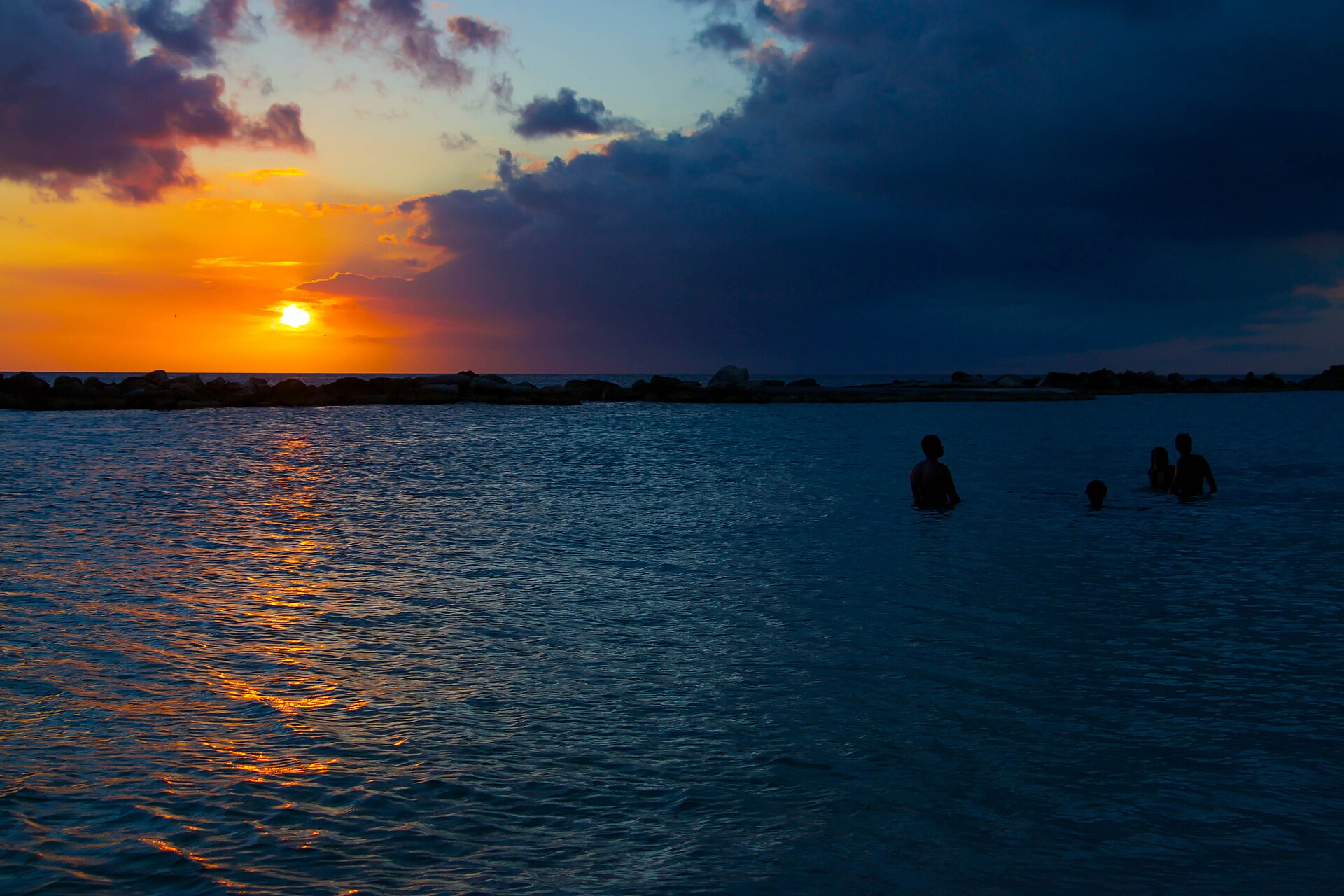
Mambo Beach
The closest beach — about ten minutes by car. Beach clubs and loungers along the boulevard.
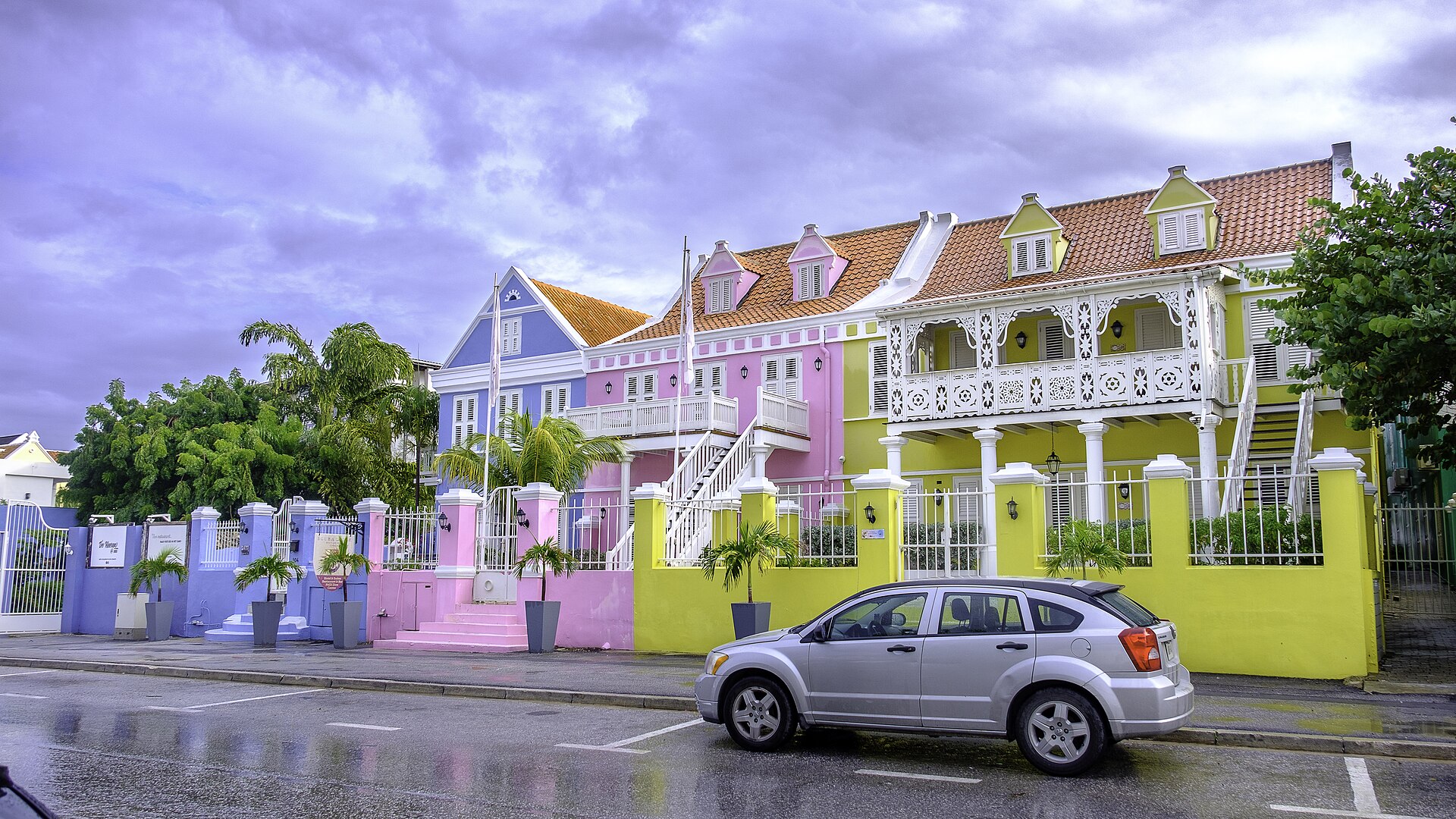
A walkable historic district in Willemstad with boutique stays, cafés, restaurants and bars.
Pietermaai is a historic district of Willemstad: a grid of restored 18th and 19th-century townhouses with restaurants, bars, small shops and boutique hotels on the ground floors.
Most of the district is walkable, with cafés, galleries, the waterfront and bars close together.
Where Jan Thiel and Mambo Beach are beach areas, Pietermaai is an urban district — architecture, restaurants, bars and live music.
Browse the published collection, or use the Curaçao Fit Engine to compare areas and bookable stays.
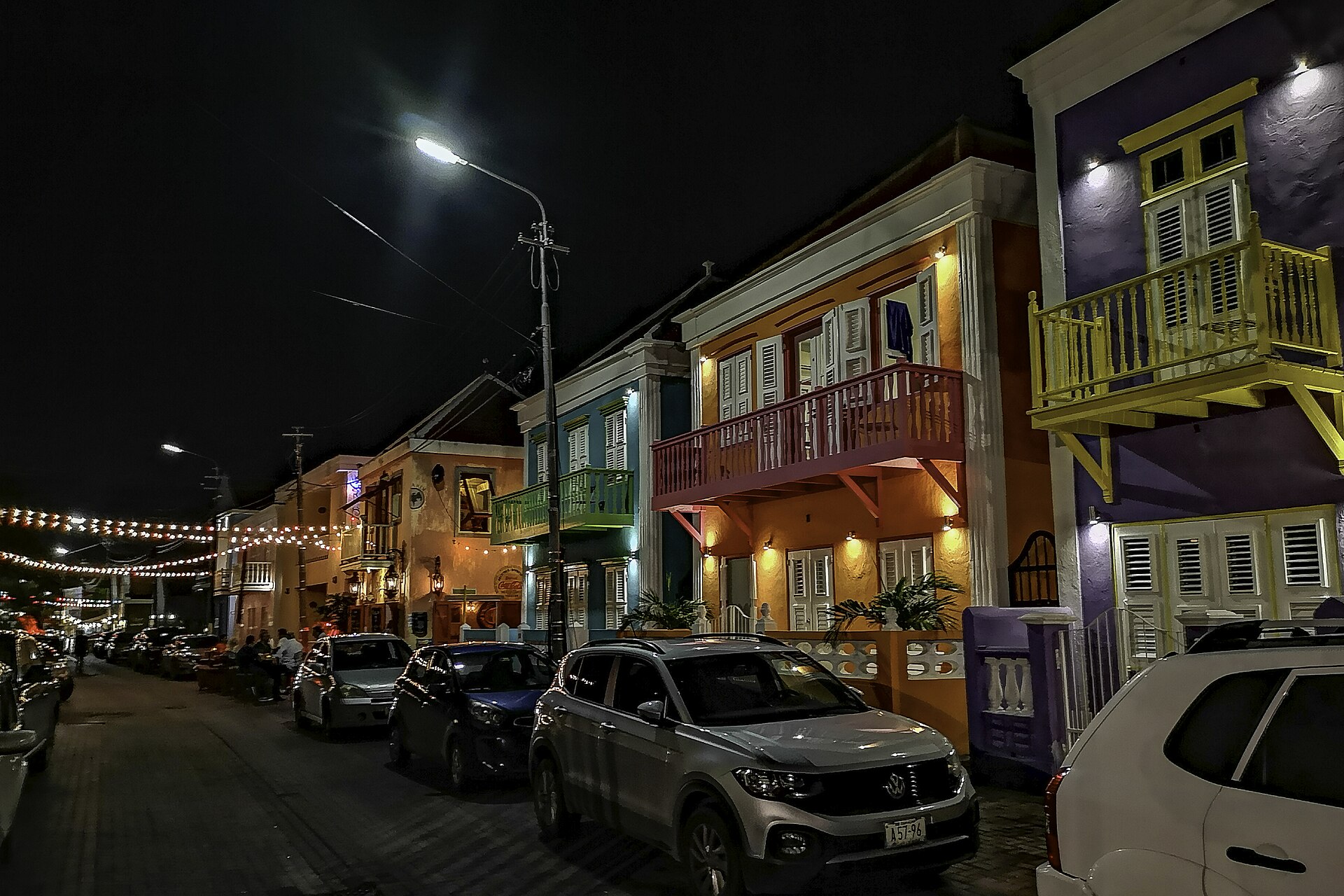
Quieter in the morning, with a handful of cafés such as Mosa and Rozendaels open early for coffee and bread.
Galleries and shops open, and waterfront terraces serve lunch. The pastel facades and cross streets to the sea are the district's main sight.
Cocktail bars open, Saint Tropez Café puts loungers out on the water, and early dinner service begins at restaurants including Kome and Ginger.
Restaurants and bars are within the same few streets: Mundo Bizarro for live music, Number Ten for cocktails, and bars along Nieuwestraat open late.
The closest beach — about ten minutes by car. Beach clubs and loungers along the boulevard.
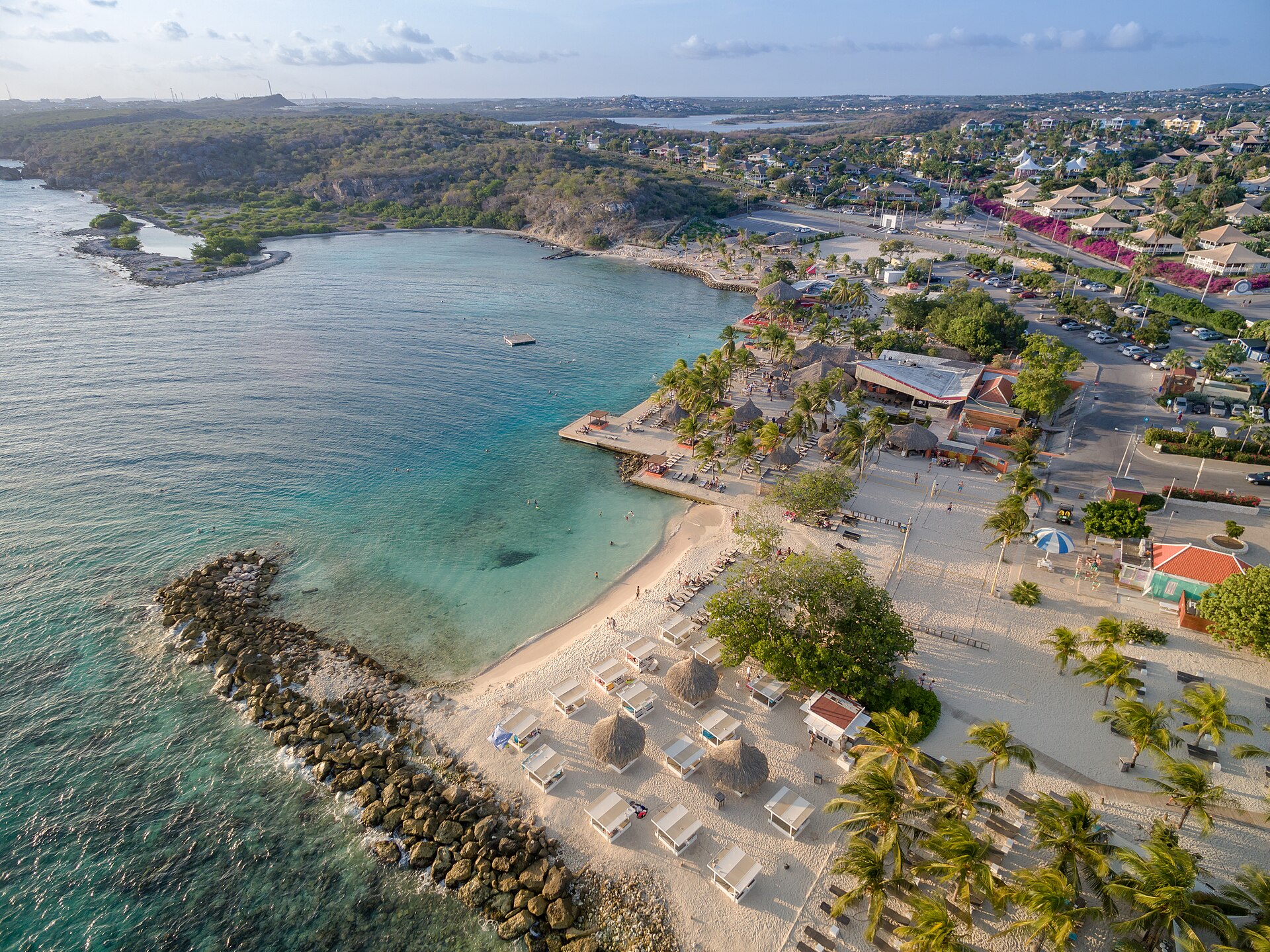
About fifteen minutes east. A sheltered bay with beach clubs, quieter than Mambo Beach.
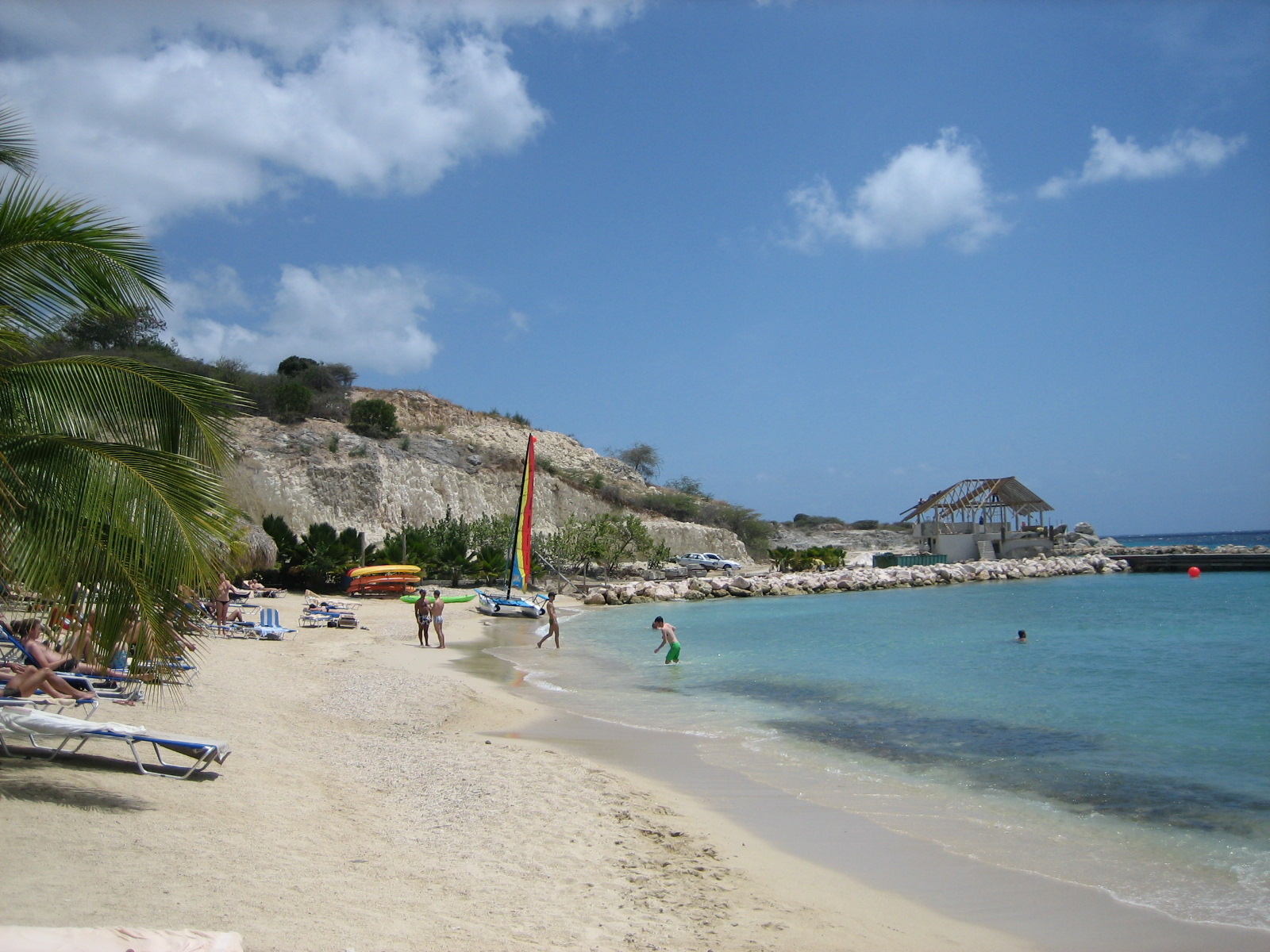
About fifteen minutes west, past Otrobanda. White sand and a longer swimming beach.

Pietermaai has restaurants, cafés and bars within a few walkable streets, used by residents and visitors alike.
Cuban-inspired bar with live music on many nights.
A small chef-led restaurant with a changing menu. Reservations are advisable.
Asian-leaning sharing plates in a courtyard setting.
Bread, coffee and a quiet courtyard in the morning.
Loungers on a pool deck over the water, open through the afternoon.
Caribbean cocktails on a small terrace.
A small candlelit cocktail bar.
Nieuwestraat, Pietermaaiweg and Penstraat are lined with restored colonial townhouses.
About ten minutes on foot: the old town, the Handelskade waterfront and the Saturday market.
A pontoon bridge that swings open for ships, connecting to Otrobanda. Willemstad is a UNESCO World Heritage site.
The other side of the harbour, with street art, the fort and casual restaurants.
Gallery Alma Blou, Landhuis Bloemhof and small design stores around Nieuwestraat.
A west-facing deck on the water, open for drinks at sunset.
The nearest beach-club strip, useful for a half-day at the beach.
A calmer residential beach area with villas.
The historic core across the floating bridge: markets, the Handelskade and museums.
Pietermaai is one of three areas first-time visitors usually compare. The practical differences are below.
Three areas on Curaçao, compared by setting, access and trip style.
Historic walkable district
Whole boulevard on foot
Walkable within the beach area, drive beyond
Many restaurants and bars within the district
Casual to mid-range, boardwalk dining
Walkable cluster of restaurants
Live music and bars open late
Beach-club DJs and boulevard bars
Restaurants rather than late bars
No beach — about ten minutes' drive
Beachfront boulevard — on the sand
Sheltered bay, short walk from most stays
Urban setting, late evenings, no beach
Sea Aquarium and shallow beach nearby
Sheltered beach, villa pools, quiet streets
Restaurants, bars and historic streets
Lively beach setting
Beach and restaurants within walking distance
Small restored townhouse hotels
Boulevard hotels and apartment blocks
Private villas rather than boutique hotels
Historic Willemstad district
Tourism-led beachfront strip
Mixed residential and visitor area
Food and bars on foot, drive for beaches
Beach, food and shops within a short walk
Most things within the area, car helpful beyond
City district, no resort setting
Boulevard hotels and apartments
Residential villas with pools
Suits travellers focused on restaurants and city atmosphere who don't need a beach at the door.
Suits first-time visitors and short stays who want beach, food and shops on foot.
Suits couples, families and longer stays who want space, a villa and calmer evenings.
Use the Curaçao Fit Engine to compare areas and bookable stays by group, pace and priorities.